ServicesRoof Inspections
Roof Inspections in Middleburg
We get on your roof, go into the attic and look at every part that tends to fail. Then we show you photos and tell you what needs work now, what to watch, and what small upkeep will buy your roof more years.
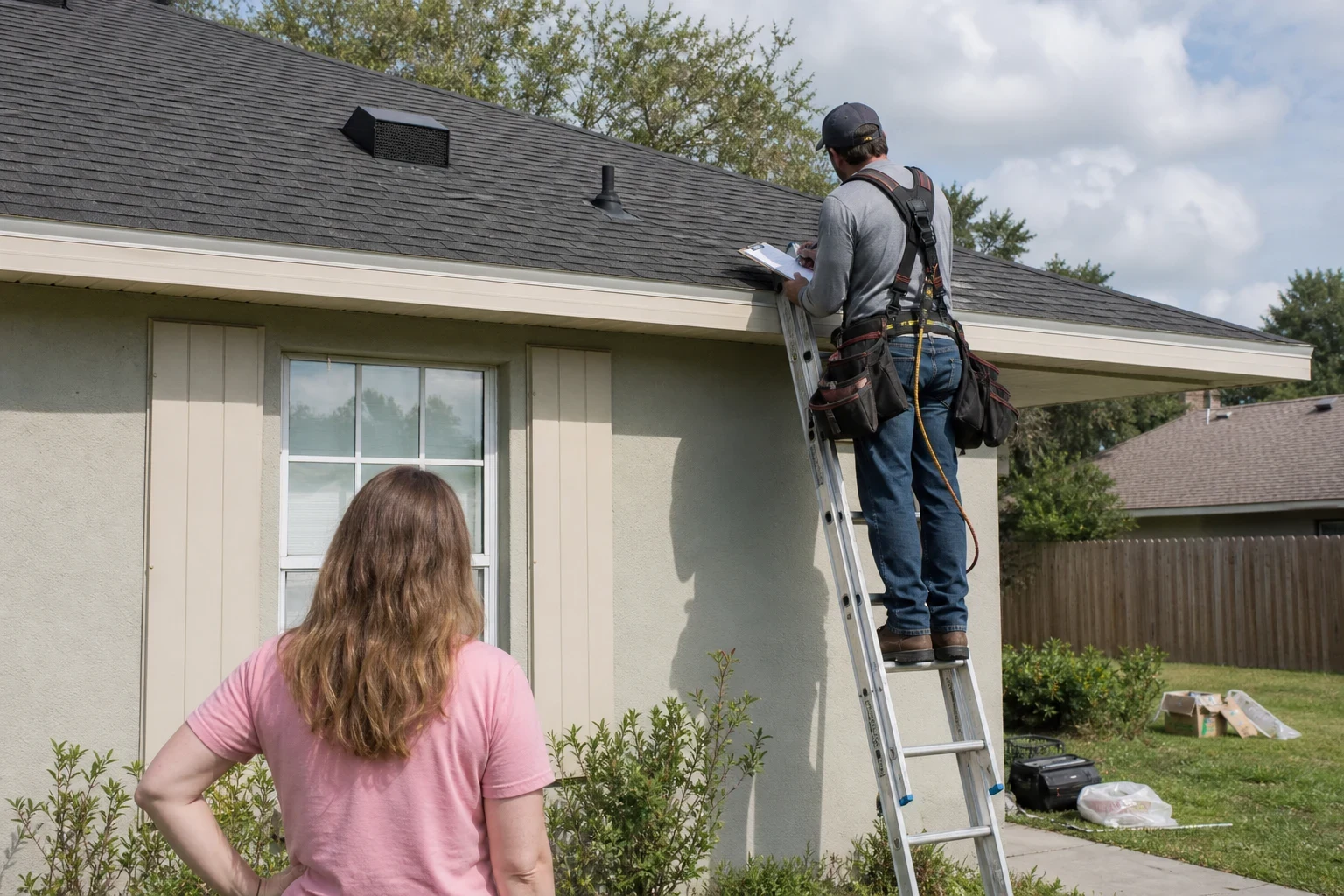
A Checkup Before Anything Breaks
Most roofs don't fail all at once. A pipe boot cracks. A nail backs out. Granules wash off one slope faster than the others. Caught early, each of those is a small job. Left alone, they turn into rotted decking and stained ceilings.
An inspection is how we catch them. It's the right call when your roof is past ten years old, when you're buying or selling, after a hard storm, or when you just haven't had anyone up there in a while. Our heat, sun and summer storms wear a roof steadily, so a regular look pays off.
You get a straight report. If the roof is in good shape, we say so and tell you how to keep it that way.
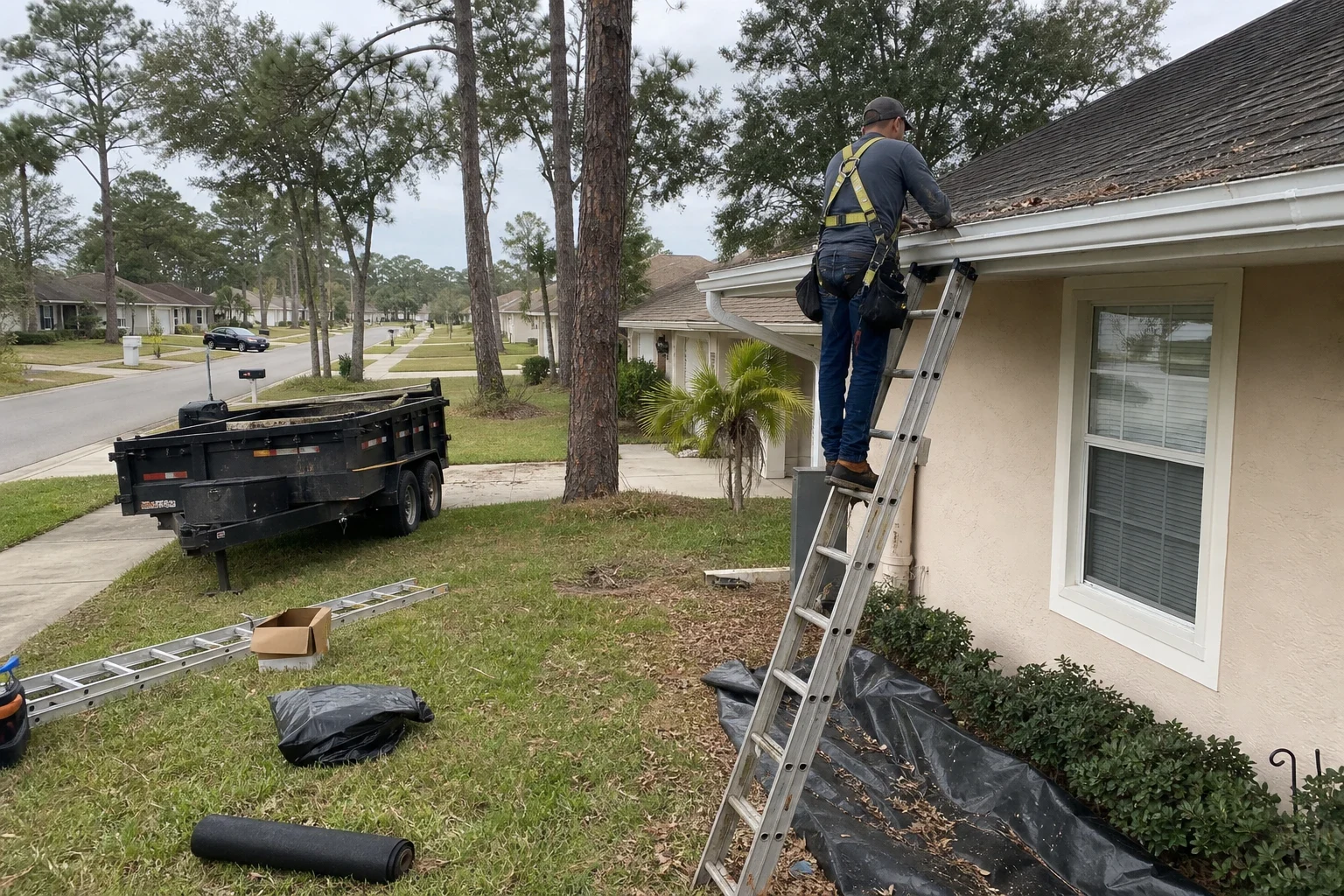
What We Check on Your Roof
- 01
Shingles or metal panels
We look for lifted tabs, cracks, bare spots where granules are gone, and loose or rusted fasteners on metal. Sun-facing slopes usually age first, so we check each side on its own.
- 02
Flashing and roof penetrations
Chimneys, skylights, wall joints and pipe vents let in more water than any open stretch of shingle. We look over the metal flashing and its sealant, plus the rubber pipe boots, which dry out and split in the heat.
- 03
Valleys and edges
Valleys carry the most water. We look for worn shingles and debris there, then check drip edge and the first course along the eaves.
- 04
Attic and decking
From inside the attic we look for water stains, damp insulation, daylight where it shouldn't be and soft decking. We also check that vents are moving air, since a hot, stuffy attic shortens shingle life.
- 05
Gutters and drainage
When gutters clog or sag, water backs up and soaks the fascia and the edge of the decking. We tell you what shape yours are in and whether our gutter service would stop the overflow.
- 06
A photo for every finding
Each problem we spot is photographed right where it sits. Your list comes in two parts: repairs to handle soon, and routine upkeep that can wait.
Questions about Roof Inspections?
Call(904) 849-9795Signs It's Time for a Roof Inspection
A stain on the ceiling
Even a small, dry stain means water got in at some point. We find out if it's still getting in and from where.
Granules in the gutters
A little grit is normal on a new roof. Piles of it on an older roof mean the shingles are wearing thin.
A big storm just passed
Strong gusts can lift and crease a shingle, then let it settle back flat. From the yard it looks fine, but the seal is broken. Post-storm inspections are free.
Dark streaks or moss
Algae streaks are mostly cosmetic, but moss holds moisture against the shingles. It's worth a look before it spreads.
A home sale is coming up
Buyer or seller, it's better to know the roof's real condition before the deal is set. Our findings give you something solid to point to instead of guesses.
It's been years since anyone looked
If you can't remember the last time someone was on your roof, it's due.
How the Visit Goes
- 1
You call and we set a time
We'll want to know how old the roof is, whether you've seen any water inside and why you're calling now. Then we book a technician visit at a time that suits you.
- 2
We walk the roof
The technician goes up, if it's safe to walk, and checks each slope, the flashing, vents and valleys. On steep or fragile roofs we use closer ground and ladder views instead.
- 3
We check the attic
We need access to the attic hatch for this part. It usually takes a short while and we leave things as we found them.
- 4
We talk it through on site
While still at your home, the technician pulls up each picture and tells you in everyday words what it shows. No work starts unless you say so.
- 5
You decide what's next
If something needs fixing, you get a free, no-obligation estimate. If it's just upkeep, we tell you what to keep an eye on and when to have us back.
What Affects the Cost
After a storm, the inspection is free. For a routine checkup, we'll tell you on the phone what the visit includes before we schedule it. Any repair work it turns up is priced separately, in a free estimate you can take or leave.
- Roof size and pitch
- A big or steep roof takes longer to walk and check safely. Some steep roofs need extra safety setup.
- Roof type
- Shingle, metal and low-slope roofs each have different weak spots, so the checklist changes.
- Attic access
- A clear hatch makes the inside check quick. Tight or blocked attics take more time.
- What the findings call for
- A cracked pipe boot is a small fix. Soft decking under a whole slope is a bigger job. Financing is available if the work turns out larger than planned.
Roof Inspection Questions
How often should my roof be inspected?
Once a year is a good habit for most roofs, and again after any major storm. Older roofs benefit from a look every year without fail. Spring, before hurricane season, is a smart time.
Do I need to be home?
It helps. Someone needs to open up the attic hatch for us, and it's easier to talk through the findings face to face. If you can't be there, tell us when you call and we'll sort out access and walk you through everything by phone afterward.
Will you try to sell me a new roof?
No. The point of an inspection is to keep the roof you have working as long as it can. If replacement is the honest answer, we'll show you why with photos, and you can take your time deciding.
Can the inspection help with an insurance claim?
It can. Every bit of storm damage we find gets photographed and written down, so you have a record to hand over. We work directly with your insurance adjuster on storm damage claims, but the adjuster is the one who decides coverage.
Do you inspect metal roofs?
We do. We check panel seams, fasteners and their washers, flashing and any signs of rust. Washers dry out over time, and replacing them is simple upkeep that heads off leaks.
Find Out Where Your Roof Stands
A short visit now tells you what your roof needs and what can wait. We'll show you every finding in photos and leave the decision to you.